Analysis of Ten Common Faults of Servo Motors
Date:2022-04-06
GUANGZHOU HAOQING MOTOR CO.,LTD
For technical consultation and product inquiries, please contact us
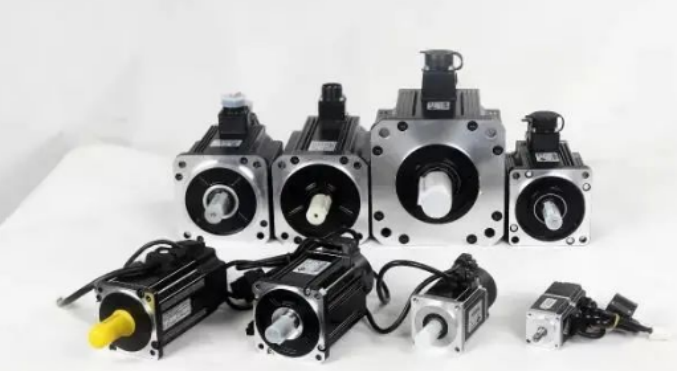
Three-phase AC servo motors are widely used. However, various faults may occur after long-term operation. Timely diagnosis of fault causes and corresponding troubleshooting are crucial to prevent fault escalation and ensure normal equipment operation.
I. Motor Encoder Alarm
1. Fault Causes
① Incorrect wiring;
② Electromagnetic interference;
③ Physical damage to the encoder caused by mechanical vibration;
④ Contamination due to on-site environmental conditions.
2. Troubleshooting
① Inspect the wiring and rectify errors;
② Check whether shielding is properly installed and wiring layout is reasonable, and make corrections; add filters if necessary for improvement;
③ Inspect the mechanical structure and carry out modifications;
④ Check for contamination or corrosion (dust, oil, etc.) inside the encoder, and enhance protection.
3. Installation and Wiring Standards
① Use original cables as much as possible;
② Route cables separately and keep them away from interference-prone wiring, especially high-interference circuits;
③ Use the internal power supply whenever possible. If a switching power supply is adopted, install filters to ensure a clean power supply;
④ Always ground the common terminal;
⑤ Insulate the encoder housing from the machine structure and connect it to the cable shield;
⑥ If encoder insulation is not feasible, connect the cable shield to the encoder housing and the grounding terminal (or dedicated terminal) on the drive frame.
II. Motor Shaft Breakage
1. Fault Causes
① Excessive radial load resulting from unreasonable mechanical design;
② Seized load side or severe instantaneous overload;
③ Misalignment during assembly of the motor and reducer.
2. Troubleshooting
① Verify the maximum allowable radial load specified in the motor manual and optimize the mechanical design;
② Inspect the operation of the load side, confirm the actual process requirements, and make improvements;
③ Check for stable load operation and vibration, and improve mechanical assembly accuracy.
III. Unbalanced No-Load Current with Large Three-Phase Deviation
1. Fault Causes
① Incorrect connection of the winding start and end terminals;
② Unbalanced power supply voltage;
③ Winding faults such as inter-turn short circuit and reversed coil connection.
2. Troubleshooting
① Inspect and correct the connections;
② Measure the power supply voltage and eliminate the unbalance;
③ Resolve the winding faults.
IV. Abnormal Noise During Motor Operation
1. Fault Causes
① Worn bearings or foreign particles (e.g., sand) in the lubricant;
② Loose rotor core;
③ Insufficient lubrication in bearings;
④ Excessively high or unbalanced power supply voltage.
2. Troubleshooting
① Replace or clean the bearings;
② Overhaul the rotor core;
③ Replenish lubricant;
④ Inspect and adjust the power supply voltage.
V. Difficult Starting and Significantly Lower Speed Than Rated Under Rated Load
1. Fault Causes
① Low power supply voltage;
② Wrong connection of the star-delta winding configuration;
③ Rotor winding cold solder joints or breaks;
④ Incorrect or reversed connection of partial rotor coils;
⑤ Excessive turns added during winding repair;
⑥ Motor overload.
2. Troubleshooting
① Measure the power supply voltage and take measures to improve it;
② Correct the winding connection;
③ Inspect for cold solder joints and breaks, then repair;
④ Locate and rectify incorrect connections;
⑤ Restore the correct number of winding turns;
⑥ Reduce the load.
VI. Motor Fails to Rotate After Power-On, No Abnormal Noise, Odor or Smoke
1. Fault Causes
① Power failure (at least two phases disconnected);
② Blown fuses (at least two phases);
③ Overly low setting of the overcurrent relay;
④ Incorrect wiring of the control equipment.
2. Troubleshooting
① Inspect the power circuit switches, fuses, and junction box for open circuits, then repair;
② Check the fuse model and cause of blowing, and replace with new fuses;
③ Adjust the relay setting to match the motor;
④ Correct the wiring.
VII. Excessive Vibration During Operation
1. Fault Causes
① Excessive bearing clearance due to wear;
② Unequal air gap;
③ Unbalanced rotor;
④ Bent shaft;
⑤ Poor coaxiality of the coupling (pulley).
2. Troubleshooting
① Overhaul the bearings and replace them if necessary;
② Adjust the air gap to ensure uniformity;
③ Perform dynamic balancing correction on the rotor;
④ Straighten the motor shaft;
⑤ Recalibrate to meet specified standards.
VIII. Motor Fails to Rotate with Humming Sound After Power-On
1. Fault Causes
① Open circuit in the rotor winding (one phase broken) or loss of power in one phase of the supply;
② Incorrect connection of the winding lead terminals or reversed internal winding connection;
③ Loose connections in the power circuit with high contact resistance;
④ Excessive motor load or seized rotor;
⑤ Low power supply voltage;
⑥ Overly tight assembly of small motors or excessively hard grease in bearings;
⑦ Seized bearings.
2. Troubleshooting
① Locate and repair the open circuit;
② Check the winding polarity and verify the correctness of the winding terminal connections;
③ Tighten loose wiring screws, use a multimeter to detect poor contacts, and repair;
④ Reduce the load or identify and eliminate mechanical failures;
⑤ Check for incorrect star-delta connection and excessive voltage drop due to undersized power cables, then correct;
⑥ Reassemble for smooth operation and replace with qualified grease;
⑦ Repair the bearings.
IX. Bearing Overheating
1. Fault Causes
① Excessive or insufficient grease;
② Poor-quality grease containing impurities;
③ Improper fit (too loose or too tight) between the bearing and shaft journal / end cover;
④ Eccentric bearing bore causing friction with the shaft;
⑤ Improperly fitted motor end cover or bearing cap;
⑥ Uncalibrated coupling between the motor and load, or excessively tight belt;
⑦ Excessive or insufficient bearing clearance;
⑧ Bent motor shaft.
2. Troubleshooting
① Apply grease as specified (1/3 to 2/3 of the bearing cavity volume);
② Replace with clean grease;
③ Repair loose fits with adhesive; machine or grind the shaft journal or end cover bore for tight fits;
④ Repair the bearing cap to eliminate friction points;
⑤ Reassemble the components properly;
⑥ Recalibrate and adjust the belt tension;
⑦ Replace with new bearings;
⑧ Straighten the motor shaft or replace the rotor.
X. Motor Overheating or Even Smoking
1. Fault Causes
① Excessively high power supply voltage;
② Low power supply voltage with the motor operating at rated load, leading to excessive current and winding heating;
③ Core burn caused by improper hot disassembly during winding repair;
④ Motor overload or frequent starting;
⑤ Single-phase operation (loss of one phase, running on two phases);
⑥ Insufficient varnish impregnation of the stator winding after rewinding;
⑦ High ambient temperature, heavy dirt accumulation on the motor surface, or blocked ventilation ducts.
2. Troubleshooting
① Reduce the power supply voltage (e.g., adjust the tap changer of the power supply transformer);
② Boost the power supply voltage or replace with thicker power cables;
③ Overhaul the iron core to eliminate faults;
④ Reduce the load and control starting frequency per specifications;
⑤ Restore three-phase operation;
⑥ Adopt double varnish impregnation and vacuum impregnation processes;
⑦ Clean the motor, improve the ambient temperature, and implement cooling measures.
Guangzhou haoqing motor co.,ltd provide a comprehensive selection of servo motors featuring full model availability and consistent performance. We look forward to inquiries and business discussions from interested customers.