
What Is The Difference Between a Servo And a BLDC Motor?
Date: 2024-11-23
GUANGZHOU HAOQING MOTOR CO.,LTD
For technical consultation and product inquiries, please contact us
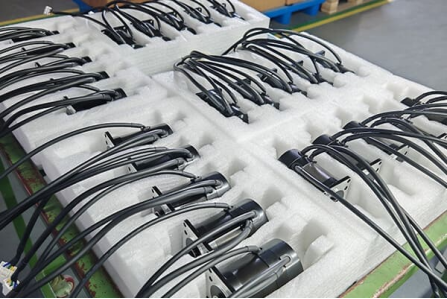
Understanding the difference between a servo motor and a BLDC motor is essential for engineers, OEM designers, automation specialists, and decision-makers in robotics, industrial machinery, medical devices, and electric mobility. We explore the technical architecture, control principles, performance metrics, efficiency profiles, cost structures, and real-world applications that clearly separate these two motor technologies while also revealing where they intersect.
Fundamental Definitions: Servo Motor vs. BLDC Motor
A BLDC motor (Brushless Direct Current motor) is an electric motor that uses electronic commutation instead of mechanical brushes. It converts electrical energy into mechanical motion with high efficiency, low maintenance, and excellent speed capability. On its own, a BLDC motor is primarily a power and motion generator.
A servo motor, in contrast, is not defined by the motor type alone. A servo system is a closed-loop motion control solution that integrates:
· A motor (often BLDC or PMSM)
· A feedback device (encoder, resolver, Hall sensor)
· A servo drive/controller
· A mechanical load system
Therefore, a servo motor is best understood as a precision-controlled motion system, not merely a standalone motor.
Core Distinction
A BLDC motor refers to the motor construction, while a servo refers to a complete control system built to achieve accurate position, speed, and torque regulation.